EBB Climate Talks: *Carbon Colonialism* by Laurie Parsons
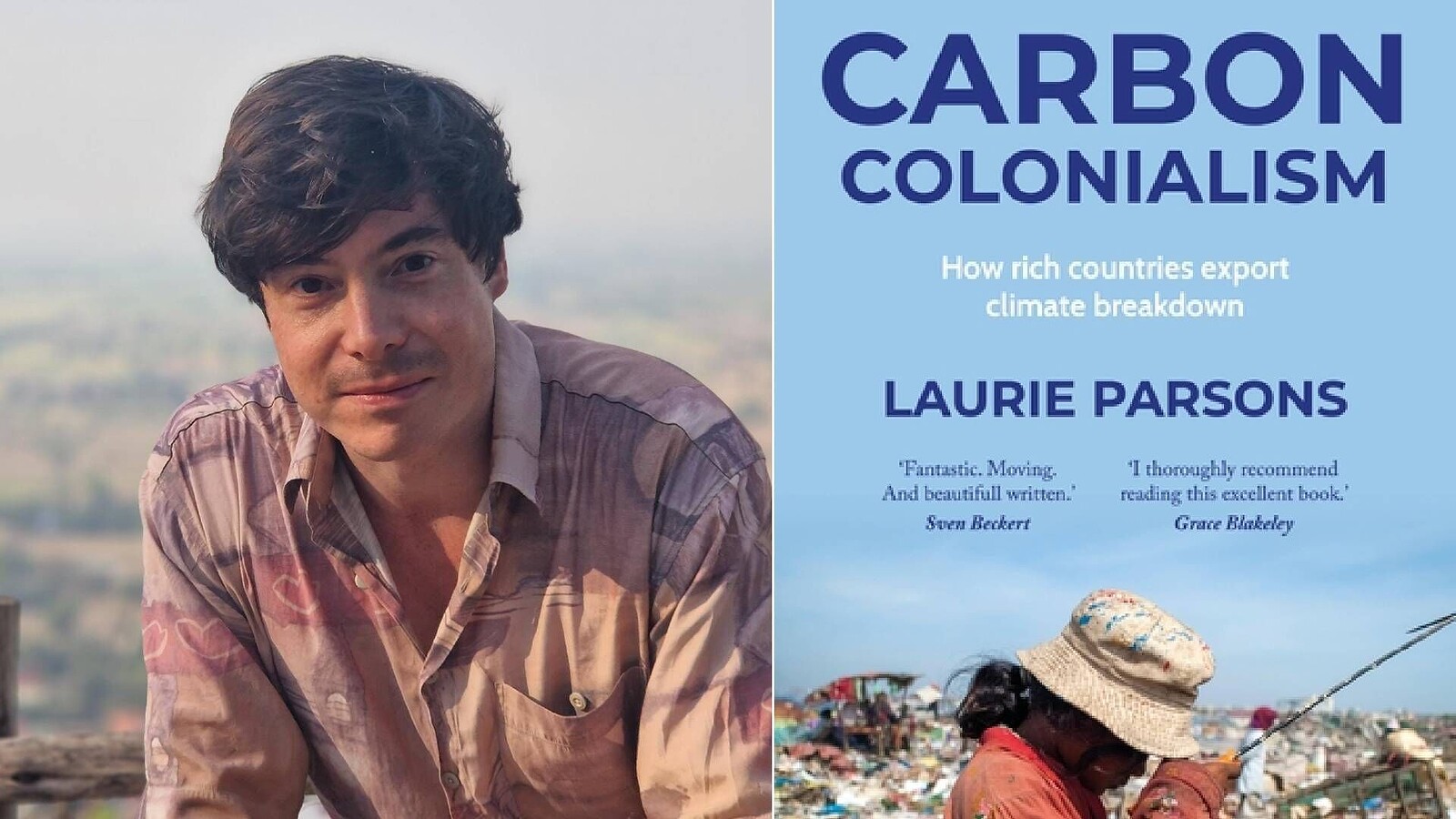
"Who pays for the illusion of progress? In the latest iteration of EBB’s climate talks, it’s greenwashing under the microscope. Author Laurie Parsons lays bare a global system in which the developed world's comfort is built on the suffering of others, as already vulnerable communities face increasing devastation from extreme heat, floods, and food poverty. A crucial unpacking of sustainability jargon."
Join the Headfirst mailing list for our unbiased recommendations.
An event on Thursday 14th May. The event starts at 19:00.
Climate change is devastating the planet, and globalisation is hiding it.
Who pays for the illusion of progress?
In the latest iteration of EBB’s climate talks, it’s greenwashing under the microscope. In conversation with Dr Adriana Suárez Delucchi from PUC Chile, author Laurie Parsons lays bare a global system in which the developed world's comfort is built on elsewhere’s suffering, as already vulnerable communities face increasing devastation from extreme heat, floods, and food poverty. A crucial unpacking of sustainability jargon.
Around the world, leading economies are announcing significant progress on climate change. World leaders are queuing up to proclaim their commitment to tackling the climate crisis, pointing to data that shows the progress they have made. Yet the atmosphere is still warming at a record rate, with devastating effects on poverty and precarity in the world's most vulnerable communities. Are we being deceived?
*Carbon colonialism* explores the murky practices of outsourcing a country's environmental impact, where emissions and waste are exported from rich countries to poorer ones; a world in which corporations and countries are allowed to maintain a clean, green image while landfills in the world's poorest countries continue to expand, and droughts and floods intensify under the auspices of globalisation, deregulation and economic growth.
Bios:
Laurie Parsons is Reader in Human Geography at Royal Holloway, University of London and Principal Investigator of the projects *The Disaster Trade: The Hidden Footprint of UK Imports and Investment Overseas* and *Hot Trends: How the Global Garment Industry Shapes Climate Vulnerability in Cambodia*. His other books include *Going Nowhere Fast: Inequality in the Age of Translocality* (OUP, 2020) and *Climate Change in the Global Workplace* (Routledge, 2021)
Dr. Adriana Suárez Delucchi is a lecturer at Universidad de O’Higgins (Chile), and a geographer specialising in political ecology with a focus on socio-environmental conflicts and governance. She currently leads a project on state-led rural drinking water initiatives in Mapuche territories within Wallmapu, examining how these can incorporate interculturality. She’s also co-investigator on the “Land-based Ethics of Care” project, exploring indigenous women's roles in gender co-responsibility, metal health and family agriculture.
-------
EBB Talks: Climate. Avoiding the end of the world, navigating the end of the month
In 2008, Mark Fisher popularised the idea that it’s easier to imagine the end of the world than the end of capitalism in his now-classic Capitalist Realism. In the years since, it has become ever-easier to imagine climate collapse than truly transformative solutions. So much of what is written, said and done about climate change is driven by the urgency of preventing ever-worsening climate impacts, imagined as “the end of the world.”
But climate activism and green politics don’t happen in a vacuum. They also need to navigate the paycheck reality of the end of the month, and the real-politik of the world as we find it, increasingly featuring climate-hostile far-right populism. As apocalyptic climate futures loom ever larger, systemic political change can feel less and less possible.
EBB’s Climate Talks ask what links the big, abstract questions around the end of the world with day-to-day concerns about making it to the end of the month. What role do energy, art, agroecology, food systems, policy and perhaps even (green) populism play in bringing the climate crisis into the kitchen table calculations of everyday life? In a series of events from autumn 2025 to summer 2026, East Bristol Books hosts authors, artists and specialists whose ideas give different windows into climate activism and politics in an era of populism, a prolonged cost-of-living crisis, and political upheaval.
Entry requirements: no age restrictions (under 18s to be accompanied by an adult over 21yrs, 1:1 ratio)
Tickets for similar Bristol events.
